Thalia brings AMALIA IP reuse platform to Israel

Cologne, Germany, 17 August 2022 – Thalia, provider of analog and mixed-signal circuit IP reuse platform, today announced its expansion into the Israel market and the appointment of Motty Houli, from TechLink Global Ltd., to represent Thalia and its AMALIA IP reuse platform in the country.  

Since Intel established a key design centre in Israel in the 1970s, the country has been renowned as having one of the semiconductor industry’s most active start-up sectors. A Semico Research report in 2020 showed that Israel was second only to the US in terms of semiconductor start-up activity. The country now has over 150 native fabless semiconductor design companies, plus dozens of the world’s leading semiconductor companies operating strategically important design centres. 

Motty Houli brings more than 25 years of local market expertise and contacts throughout the industry, both at the semiconductor and system level. Having started his career as a chip designer, Motty Houli is well positioned to understand the needs of Thalia’s customers and the potential for Thalia’s IP reuse platform. 

Thalia’s AMALIA IP reuse platform is employed by companies around the world to maximise their investments in development efforts, as well as ensuring companies have a cost and time-efficient solution to migrate their existing product lines onto new wafer fabs and process nodes. AMALIA has delivered over 40 analog and mixed signal Ips, many in silicon and in commercial use, ranging in applications from, Wifi, BLE IP, image sensors, ADCs, PLL and Power Management IPs. 

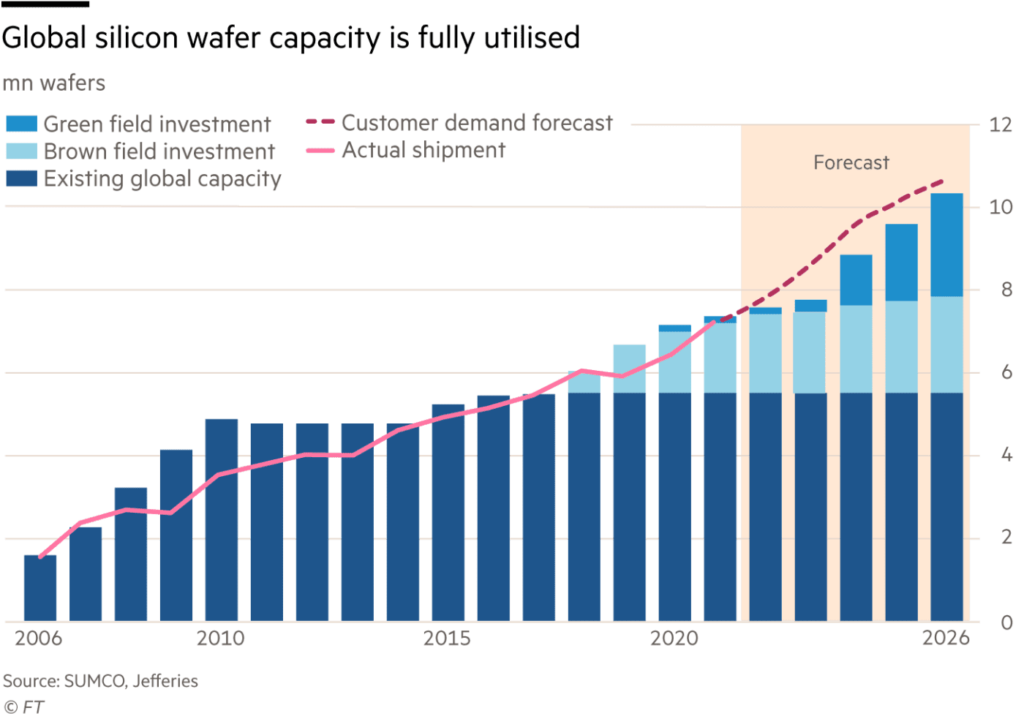
The benefits of Thalia’s AMALIA platform are increasingly important to designers during the current period of tight capacity in the semiconductor industry. 

Sowmyan Rajagopalan, Thalia CEO, commented, “Israel is a market that’s been of interest for a long time. A lot of companies we engage with have design operations and decision makers in the country. We are pleased to have Motty as a sales rep in the region. The crunch in the semiconductor capacity is highlighting the importance of strategic, planned analog IP reuse as part of a company’s roadmap. This is driving our need to expand globally to serve this growing and increasingly urgent requirement.” 

Exploring IP Reuse opportunities in 2022 at Siemens EDA User2User Europe event

The Siemens U2U event takes place in the US (Santa Clara, CA), and here in Munich, Germany. We couldn’t resist the opportunity to be part of an event on our doorstep where we could learn, share and network with fellow technical experts who design leading-edge products using Siemens EDA tools.

In particular, the well-attended and in-depth user-focused event turned out to be a fantastic opportunity for the Thalia team to really get ‘under the hood’, to understand how things work with the entire Siemens EDA flow and, in particular, how to integrate the Tanner EDA and AFS Simulator into Thalia’s AMALIA solution.

Siemens EDA, then Mentor Graphics, acquired Tanner EDA back in 2015 and the powerful analog-mixed signal tools are now thoroughly integrated as part of the Siemens EDA toolflow. Some of Thalia’s customers utilize the AFS (Analog Fast SPICE) Simulator so in-depth discussions with Siemens engineers and some of the Tanner EDA specialists enabled us to really do some deep-dive discussions which will educate our own customer engagements.

The event also gave the team an opportunity to directly engage with some of our potential customers, to explore how IP reuse using the Thalia AMALIA platform, could help their migration strategies and help them to both accelerate time to market and drive down costs of porting to more cost-effective nodes or manufacturing options.

It was interesting to see what Tanner EDA team presented on an XFAB case study, demonstrating how easy the Tanner custom IC design tools from Siemens are to use and to integrate with best-in-class circuit simulators, Calibre for design rule checking, parasitic extraction and physical verification.

In terms of what opportunities lie ahead for AMALIA and our IP reuse platform, it was really interesting listening to Joe Sawicki, EVP at Siemens EDA in his session ‘From IC to Systems: New Opportunities for the Semiconductor Industries’ which focused on supporting technology scaling which is driven by increasing system complexity and migrating to new nodes but with it comes an escalating cost to create new SoCs of unprecedented size and functionality on accelerated schedules.

Future Horizons CEO Malcolm Penn pondered how the semiconductor industry will continue to perform and how it can be accurately forecast in the face of the death of Moore’s Law.

Overall, an excellent event, and a great deal of knowledge and insight taken away for our own thinking. With thanks to Siemens for putting on this conference. 

Ramifications for planning in the face of chip shortages

This is the third and final blog in a short series of posts looking at the chip shortage crisis our industry is facing. Previous posts looked at the political situations both affecting and attempting to tackle the problems, and how the chip makers are ramping up and investing in their own attempts to sensibly fill the supply gaps and maximize on the opportunities as quickly as possible. 

In a previous recent blog, I’ve set out some thoughts on the realities and impacts of chip shortages on the evolving connected car market.  

S&P are scaling back forecasts on car production for 2022, given the chip supply issue affecting the industry. Automotive industry impact: ‘Toyota and Nissan, have scaled back production and others such as BMW, Ford and Volvo have removed certain features from some cars to enable them to continue production.’ 

In the mobile phone markets, Samsung and Apple have been using their might to maintain their own supplies…but other OEMs have been left struggling
“low-end OEMs…struggled the most to adapt with chip foundries expected to take “years” to spool up to demand.” https://www.androidpolice.com/apple-and-samsungs-smartphone-businesses-are-surviving-the-global-chip-shortage-in-ways-only-they-can/ 

In the face of chip shortages and times of geopolitical uncertainty, shortages will continue in the short to mid-term at least, so OEMs looking to remain competitive will need to continually assess their options and consider moving or duplicating (second-sourcing) designs to secure capacity from more than one manufacturing partner. 

Some Tier 2 fabs are positioned ready to seize the opportunities in these times of uncertainty – they can offer attractive costs and potentially be more responsive and adaptable to customer needs. 

Migrating IP to other fabs, design nodes or process technologies can be complex and, itself, time-consuming (hence competitively prohibitive) unless it’s done with the right tools. That is where we at Thalia can help. For 2022 and possibly into next year we need to help our customers reduce their costs in IP migration through innovative IP reuse, and help to maintain their competitive edge. 

Diversification and investments

The second in our series of blogs looking at pressures on the industry of the chip shortage discusses what we see happening in the chip manufacturing (wafer fabs) industry, in particular. This is an industry traditionally dominated by a small number of players and the price of entry is huge – hence, a bit like turning a container ship, these giants take time to move and the costs of expansion are significant. 

At advanced process nodes (used for mobile devices such as advanced smartphones, tablets), TSMC is responsible for an estimated 92% of global production. Across the board, TSMC still supplies a quarter of the world’s supply of chips (24%) – and its capacity is fully utilised and it continues to expand its facilities: particularly important that this expansion is happening overseas given the geopolitical risks mentioned in the previous blog.  

TSMC is being bullish and believes the demand is a long term upward trend and is even committing $100Bn in investments to expand its own capacity and research facilities.  

But it’s clear that given the geopolitical risk we discussed in the previous blog, TSMC sees the need for its future facilities to be more globally diversified. The technology industry is nervous about the impact on the #1 supplier with tensions once again growing between China and Taiwan. One active TSMC strategy is building the fab in Phoenix, Arizona:  

https://www.cnbc.com/2021/10/16/tsmc-taiwanese-chipmaker-ramping-production-to-end-chip-shortage.html 

The final blog in the short series on ‘chip shortages’ will look at the impact on planning decisions and the measures companies need to take to maintain profitability in the face of time-to-market pressures and a shift in the chip supply chain. 

Geopolitics and global chip shortages

This blog is the first in a series of three snapshot articles on the effects of chip shortage on the industry: What impacts is it having? What changes are taking place in the industry, or even in politics, in attempts to guarantee supplies and ring-fence national or regional supplies? And finally, once plans are in place for second-sourcing, or alternative manufacturing, how does that affect design decisions, time-to-market and ultimately, profitability? 

Access to chip supplies – hence to the manufacturing of chips – have become a strategic initiative for companies and nations alike. Lockdowns due to Covid-19 has arguably caused a lot of the ‘tailbacks’ seen in the industry. But while it’s been a catalyst, there are other factors at play and it’s making nation-states and regions start to evaluate the strategic importance of their chip supplies. 

The fact is, in spite of problems with supply chain, or businesses affected in various ways due to Covid-19 lockdowns, demand has not dropped off, and shows no signs of scaling back. Quite the opposite. 

In fact, we’ve seen in recent weeks, the risks of global conflict certainly affect supply and demand and can impact the industry in ways we’d never thought of, with the growing crisis in Ukraine set to affect the supply of palladium and scandium – some of the raw materials used in chip manufacturing:  

But more generally, changes in the geopolitical climate are making chip companies consider and reconsider where they source or where they manufacture. US politics can discourage or stop companies from moving their manufacturing to China for example.  

Global Wafers attempting to invest in Siltronic – but ‘stalling’ for what appears to be political reasons. 

The big wafer fabs are rethinking their own strategies to both keep pace with the chip shortage and to fend off geopolitical risks that may affect their own supplies or access to their customers. Some of this is the Tier 1 chip makers extending their manufacturing, both to other parts of the world, or in the same region to simply increase their capacity. 

But it’s not a quick fix: wafer fabs take a lot of money and typically at least three years to build and become operational. 

In Europe, the $43bn EU chips act is targeting European self-sufficiency to raise its game – aiming for 20 percent of the global market by 2030. The act also is also designed to prioritise Europe’s own needs ‘in times of shortages’. 

The second blog in this series will look at how companies are restructuring and where investment decisions are being driven by the risks of global chip shortages and these geopolitics pressures.

Long tail supply chain ramifications

supplychainAs the world recovers from the global pandemic and vaccination programmes gain pace, the tone of news is, on the whole, optimistic. As the focus moves to economic recovery and a return to something resembling normality, many sectors are breathing a metaphorical sigh of relief.

Elsewhere are worrying signs that the knock-on effects of the pandemic are only now beginning to surface. Factories that shut down and are now ramping back up to capacity are finding they are coming back online only to face supply chain issues as capacity in component supplier factories has shifted to other priorities.

The automotive sector is one of many affected. Modern cars have an abundance of technology – recent reports suggest 150 million lines of code and up to 100 different processors. As the pandemic hit, automotive manufacturing slowed as demand stalled, and only now that other sectors are opening up are demand forecasts suggesting that the time to ramp up production has arrived. But the supply chains that are relied upon for the sensors, circuits and processors have been diverted to service sectors that didn’t stall, and in fact thrived, through the pandemic.

Sectors including wireless, IoT, personal comms and video streaming have burgeoned through the pandemic. Zoom’s revenues had quadrupled by September 2020, and Microsoft reported a 50% increase in daily active users and neither are expecting this increase in demand to drop off. So when automotive demand dropped, fabs switched their attention – and capacity – to service sectors that were thriving. It’s good business.

But those same fabs aren’t going to switch back at the drop of a hat when the car industry calls – contracts are signed, processes in flow and capacity simply isn’t there. Fabs slowed down the expansion of their wafer capacities as demand was lower. It takes time – from 20 weeks up to a year or two to bring a wafer fab online, so simply increasing capacity isn’t an option either. Instead, the fabs are in a position of strength, with their services in high demand, so the long-term picture, for them at least, is strong, but for sectors that experienced a drop in demand and revenues and were anticipating a resurgence, it seems the true impact of the pandemic is only now starting to take effect.

It’s rumoured that TSMC’s 5nm capacity is all taken up by Apple, and Samsung are in a similar thriving position, with reports that their legal teams are all engaged in managing NDAs and contract negotiations and have no capacity to discuss new engagements with prospects.

So while some win, others lose out. In the long run, things will inevitably find some type of equilibrium, but in the short term is there a learning to be taken? Could IP reuse shortcut at least some of the delay?

Perhaps. But supply chain resilience is a huge and escalating issue. There are other socio-economic issues in the mix too with tensions around political topics in the far east, anxieties are certainly high. There has never been a more important time to ensure your supply chain is robust, resilient and reliable.

This is an issue occupying many in Europe and the US. With the issue now top-of-the pile for leading politicians globally – not least in the White House – one positive outcome is likely to be the development of new manufacturing plants closer to home.

Interesting to note that since I posted this blog the subject has gone mainstream – for example, in a recent news piece from the BBC, the Harvard Business Review and the Guardian.


IPSoC 20 Conference: Increasing confidence in analog and mixed signal design reuse

At the December virtual IPSoC conference, our CTO, Sowmyan Rajagopalan, presented his paper on increasing confidence in analog IP reuse. His presentation is available in the video below. If you would like to understand what Thalia’s targeted automation and migration expertise means for your next project, get in touch to find out more.

Hands-free driving – and the technology behind it

Hands-free driving could be legal on UK roads by spring next year, the UK government has said. A consultation on the technology involved is under way. Specifically the UK’s Department for Transport (DfT) has issued a call for evidence into automated lane keeping systems (ALKS).

The technology to do this is still very much developing, although we can certainly expect that it will make significant demands on the semiconductor industry that Thalia serves. But first some background.

This consultation looks at level three (of five) on the way to the ultimate aim of completely automated driving. In stage two the vehicle can control both steering and acceleration / deceleration. The automation isn’t classed as self-driving because a human is still required to sit in the driver’s seat and be prepared to take control of the car at any time.

Level 3 vehicles, however, have what are called environmental detection capabilities and can make informed decisions for themselves, such as accelerating past a slow-moving vehicle. The driver must remain alert and ready to take control if the system is unable to execute the task but, in theory, the driver could do other things such as check email or even watch a movie – until the car prompts him or her to take over again.

But don’t get too excited just yet. The UK government’s call for evidence, at some 46 pages, makes some pretty stern safety demands of what it calls ‘a traffic jam chauffeur technology designed to control the lateral and longitudinal movement of the vehicle for an extended period without further driver command’. These demands include a driver availability recognition system, reasonable thresholds designed to prevent unintentional inputs into the override capabilities, a data storage system for automated driving and numerous compliance requirements involving monitoring and control criteria – to name but a few.

But that isn’t all. The ALKS regulation approved in June 2020 by the United Nations Economic Commission is for a system (in its current form) capable of operating at speeds of up to just 37mph. It is therefore designed for situations of heavy, slow-moving traffic on a motorway. Why motorways? Because they go one way and are more controlled and simpler environments than most others. A slow-moving motorway is a good place to try out stage three ALKS.

Elsewhere in Europe, Germany has drafted legislation for level 4 autonomous vehicles. As yet, the legislation remains unpublished, but Germany, as the country of origin for most OEMs relating to the technology behind assisted and self-driving vehicles, could expect to see the reality of self-driving vehicles sooner rather than later. If this is the case, German legislation will likely guide all other nations legislative developments.

Even with the restrictions at levels 3 and 4 of automation, the market seems to be a promising one. According to a report released earlier this year by Acumen Research and Consulting, the global automotive lane keep assist system market is expected to reach a market value of around US$7 billion by 2026 and is anticipated to grow at a CAGR of around 16% in terms of revenue during the report’s forecast period 2019 to 2026.

It will no doubt mean a lot of work supplying a whole new market with tech – and a whole new semiconductor market with relevant IPs. And, of course, this market has a lot of development to do; new requirements, new sensors, new software and new hardware will supersede each other. Within a lot less than ten years, we may see not only level four (vehicles operating in self-driving mode within a limited area) but early level 5 cars: able to go anywhere and do anything that an experienced human driver can do.

As for public acceptance of ALKS, we can certainly assume that even hiccoughs or bad publicity will only slow rather than stop the rollout of this form of automated driving, and that when the first completely autonomous cars arrive – sometime after 2026 in all likelihood – a $7 billion market will just be the start.

SemIsrael: Thalia CTO Sowmyan Rajagopalan discusses the challenges of analog IP reuse  

Looking back on June’s SemIsrael virtual event and reflecting on the topics discussed, it’s clear that the developments taking place in the fields of LIDAR and 5G are having a significant impact on the semiconductor industry.

The need for high speed sensors and data conversion to enable autonomous cars will place an increasing demand on the sector to deliver components quickly and evolve them as technology advances. While full autonomy is some way off, the evolutionary process of connected vehicles will mean that the needs will change as technology becomes more advanced and vehicle systems demand more from sensors and mobile data connectivity.

Machine learning was also prevalent in the agenda and discussions. The benefit of machine learning in migration from one process to another is clear and given the time that can be saved in getting new IPs to market, it’s no surprise that the industry is heading in this direction.

Verification, design, IoT devices and Thalia’s own targeted automation technologies are all areas where we are seeing machine learning play an ever-more important role. High performance circuits, including technologies such as 12FF and 7FF, are increasingly demanding the efficiency and accuracy that machine learning can deliver at pace.

Our CTO, Sowmyan Rajagopalan, presented his paper on addressing technology differences in IP reuse. His presentation is available in the video below. If you would like to understand what Thalia’s targeted automation and migration expertise means for your next project, get in touch to find out more.